Small and medium-sized enterprises (SMEs) are the backbone of the European and Lithuanian economies, accounting for as much as 99% of all businesses in the region and employing over 85 million people. However, data from a study by the European Commission and the European Central Bank reveals that this critically important sector lacks around €1 billion in capital annually in Lithuania alone. As many as 36% of SME financing applications are either completely rejected or receive less funding than required.
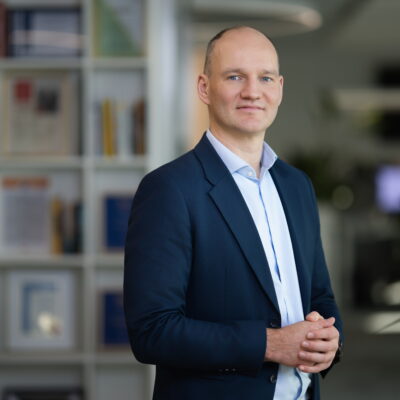
“SMEs in Lithuania still too often fall outside the risk assessment margins of the dominant major banks. After hearing a negative response from their primary bank, entrepreneurs frequently give up. Under these conditions, alternative financing and small banks are virtually the only realistic strategy to stay competitive and not lose the battle to faster-moving competitors,” says Lukas Baškys, Deputy Chief Executive Officer at SME Bank, a bank dedicated to SMEs.
L. Baškys notes that the major players primarily compete for a few hundred large corporations, leaving smaller businesses behind. This market void is successfully being filled by flexible, specialized banks that offer tailored solutions and serve as a genuine guarantee for SME survival.
Overcoming collateral and slow pacing issues
For SMEs seeking capital, two major pain points stand out: collateral requirements and the speed of decision-making at large banks. Because the banking sector is strictly regulated, the processes in traditional banks, such as document verification and forecast analysis, are remarkably similar whether approving a €1 million or a €10 million loan. To achieve operational efficiency, major banks prefer to take on one large client over ten smaller ones, stretching decision-making timelines to weeks or even months.
SME Bank and other small players solve this problem by adopting a digital FinTech mindset. A preliminary response and financing offer are often provided here within a day or two. For a business experiencing a shortage of working capital, such speed is absolutely critical.
Strategic partnership with the state
One of the greatest hurdles for SMEs is the lack of tangible collateral. The majority of the country’s small businesses do not own real estate that they could pledge. For major banks, this is a sufficient reason to deny the requested financing.
Small banks address this issue through active collaboration with ILTE, the national development bank. For instance, by utilizing state portfolio guarantees that cover up to 80% of the loan amount, SME Bank has already channeled more than €38 million to small businesses. This makes it possible to provide financing to companies that lack traditional collateral but demonstrate strong future potential.
The Advantage of individual assessment
While major banks evaluate businesses based on rigid, automated frameworks of past balance sheets, small banks look closely at actual cash flows and business logic. SMEs are offered solutions tailored to their daily operational cycles. For example:
Invoice financing (factoring) allows companies to receive immediate funds for working capital instead of waiting 60–90 days for buyers to pay their bills. Credit lines are granted for purchasing raw materials or expansion without excessive bureaucratic hurdles.
Leasing is tailored for upgrading equipment and transport. Since the acquired asset itself (a piece of manufacturing equipment, a truck, or a solar power plant) serves as collateral for the bank, the company does not need to pledge additional assets it simply doesn’t have.
Small banks provide a decisive competitive edge here: they allow a company to avoid postponing expansion for three years while accumulating equity. Instead, businesses can acquire modern equipment here and now, optimize costs, and outpace competitors.
A second bank is a necessity, not a luxury
Studies show that up to 75% of Lithuanian SME representatives approach only one or two banks when looking for capital. After receiving a negative response from the major banks, they often give up and do not even reach out to smaller financial institutions.
SME Bank and other small market players do not just provide financing, they also act as financial advisors. In a dynamic economic environment, establishing a relationship with an alternative or specialized bank is becoming an essential diversification strategy for SMEs, safeguarding both company liquidity and jobs.


 Sveiki
 Tere
Tere